
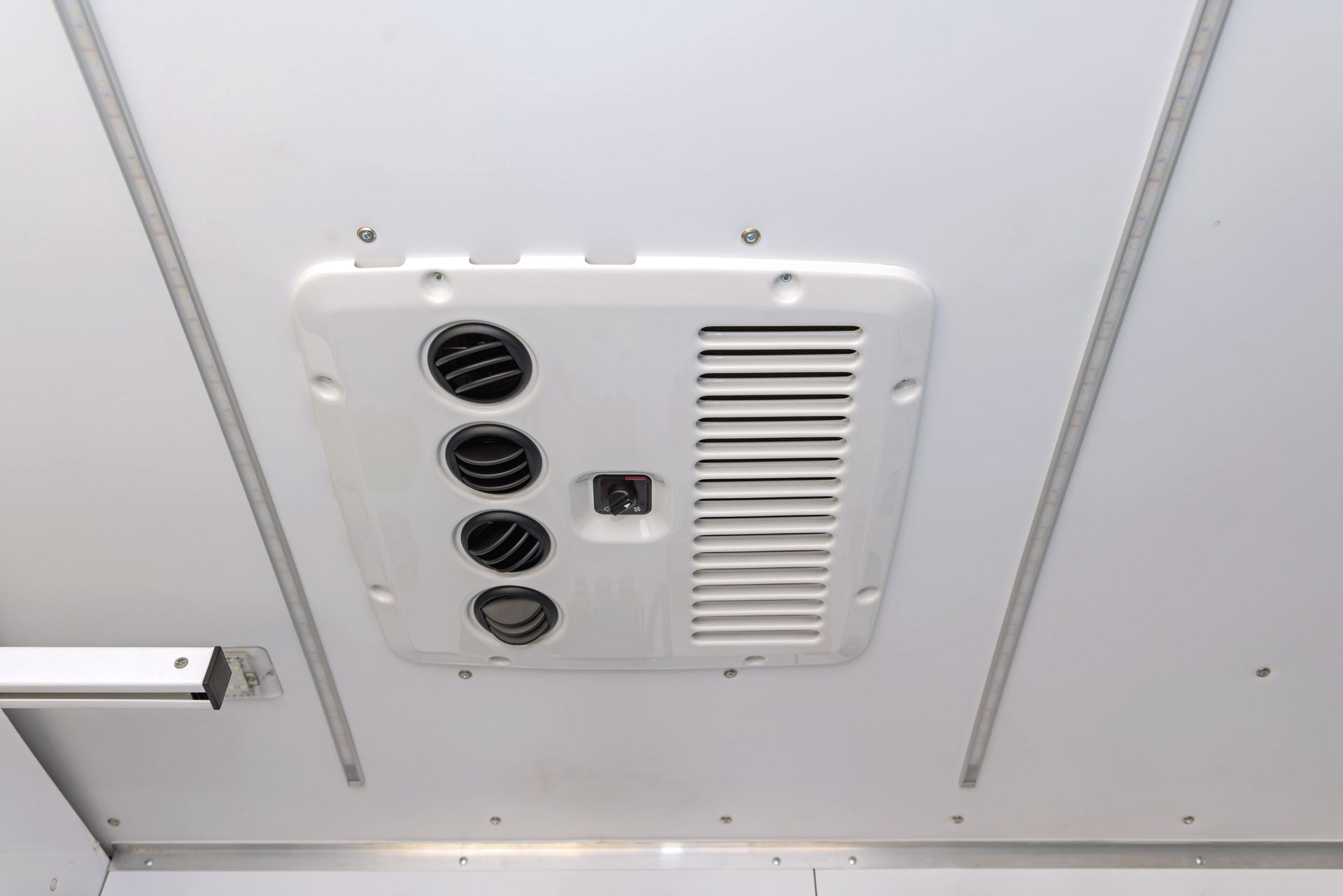
Overview of Roof A/C Services
High Country RV provides roof A/C services focused on the inspection, repair, and maintenance of rooftop air conditioning systems used in recreational vehicles. Roof-mounted air conditioners are essential for maintaining safe and comfortable interior temperatures, especially during travel or stationary use in warm or fluctuating climates.
RV roof A/C systems operate by pulling warm interior air through evaporator coils, cooling it through refrigerant cycles, and redistributing it back into the RV interior. These systems rely on stable electrical supply, clean airflow pathways, and properly functioning compressors and fans to maintain consistent cooling performance.
This service is especially important in Mesa, Arizona, where extreme summer heat places heavy demand on cooling systems, and in Flagstaff, where temperature swings and seasonal usage can affect system efficiency and startup reliability.
Roof A/C Cooling System Operation
Roof A/C systems function through a sealed refrigeration cycle designed to remove heat from the RV interior and release it outside through rooftop ventilation components.
Compressor Operation
The compressor is responsible for circulating refrigerant through the system. It pressurizes the refrigerant, allowing heat absorption and release during the cooling cycle. Compressor wear or failure can lead to reduced cooling or complete system shutdown.
Evaporator Coil Function
Evaporator coils absorb heat from interior air as it passes through the system. Dirty or frozen coils can restrict airflow and significantly reduce cooling efficiency.
Condenser Coil Heat Release
Condenser coils release absorbed heat to the outside environment. Proper airflow across these coils is essential for maintaining cooling performance, especially in high-temperature conditions.
Refrigerant Cycle Balance
The refrigeration cycle depends on precise pressure levels. Leaks or imbalances in refrigerant levels can cause inconsistent cooling or compressor strain.
Airflow and Ventilation Systems
Proper airflow is essential for roof A/C performance, ensuring that cooled air is evenly distributed throughout the RV interior.
Return Air Intake
Warm interior air is pulled into the system through return vents. Blockages or restricted airflow can reduce cooling efficiency and strain system components.
Blower Fan Operation
Blower fans circulate cooled air back into the RV. Motor performance is evaluated for speed consistency, noise levels, and electrical reliability.
Air Distribution Channels
Ductwork and internal air channels are inspected for blockages, leaks, or disconnections that may cause uneven cooling or reduced airflow.
Vent Cover and Roof Assembly
Roof-mounted covers protect internal components while allowing heat dissipation. Cracks or damage to vent covers can affect airflow and system protection.
Electrical Components and Power Supply
Roof A/C units depend heavily on stable electrical systems to power compressors, fans, and control modules.
Power Supply Integrity
Electrical connections are inspected for voltage stability, corrosion, and secure wiring. Inconsistent power can cause system shutdowns or reduced cooling output.
Capacitor and Relay Function
Capacitors and relays support compressor startup and motor operation. Faulty components may prevent the system from starting or cause intermittent performance issues.
Control Board Operation
Control boards regulate system cycles, fan speeds, and temperature settings. Malfunctions in these boards can disrupt cooling operation or prevent system response.
Thermostat Communication
Thermostats are tested for accurate temperature readings and proper communication with the roof A/C unit. Incorrect signals can result in inconsistent cooling cycles.
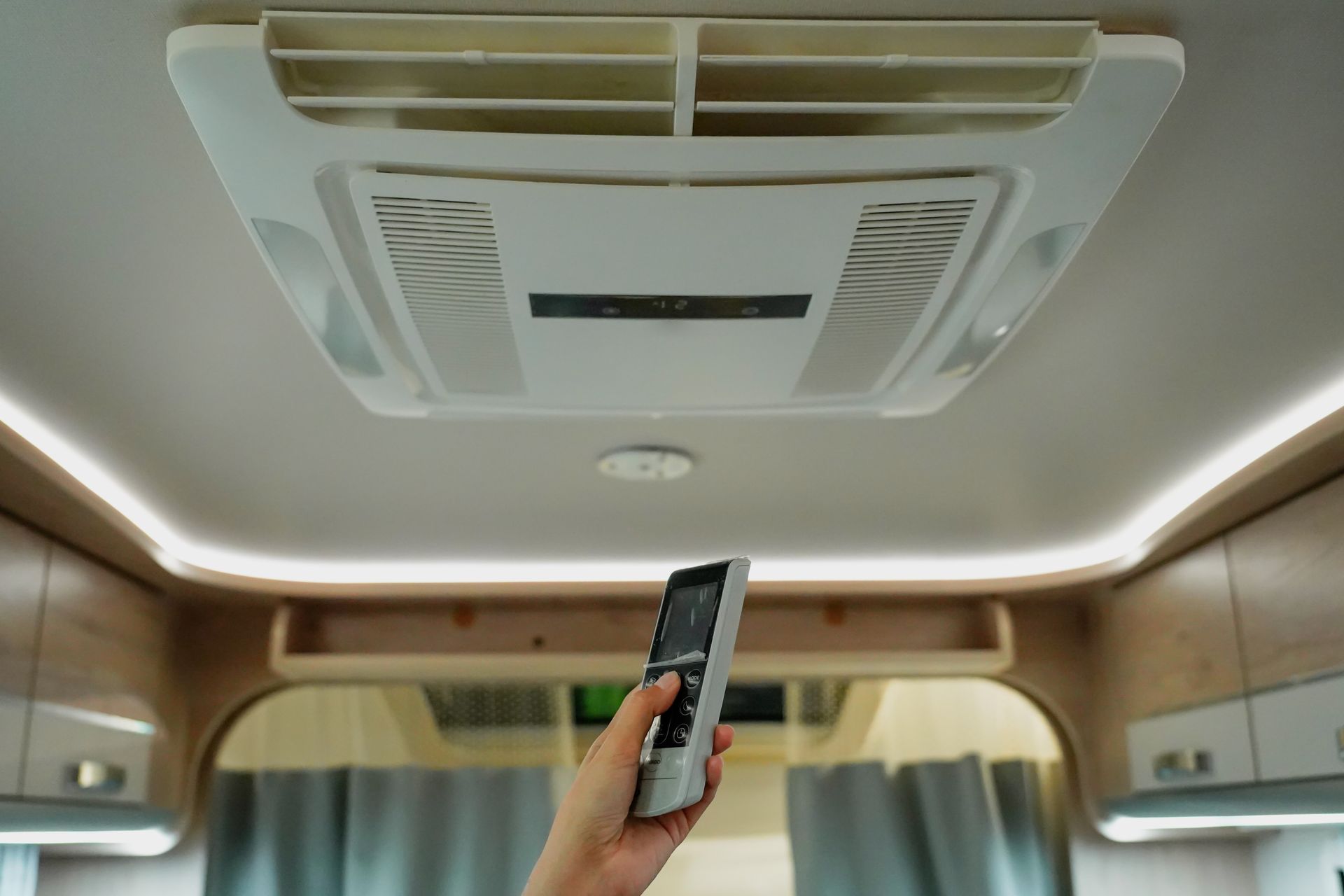
Roof A/C Diagnostics and Repair
Roof A/C diagnostics involve identifying issues affecting cooling efficiency, airflow balance, or electrical operation.
Cooling Performance Testing
Interior temperatures are measured to determine whether the system is achieving proper cooling output. Uneven or weak cooling may indicate refrigerant or airflow issues.
Compressor and Motor Evaluation
Compressor and fan motors are inspected for overheating, wear, or electrical failure. These components are critical for system operation and cooling efficiency.
Refrigerant System Inspection
Refrigerant levels and system pressure are evaluated for leaks or imbalance. Loss of refrigerant directly affects cooling capacity and system reliability.
Airflow Restriction Analysis
Reduced airflow is often linked to clogged filters, blocked ducts, or fan motor issues. These restrictions can significantly impact system performance.
Roof A/C Maintenance and Preventive Service
Routine maintenance helps extend system life and ensures consistent cooling performance during peak seasonal use.
Coil Cleaning and Debris Removal
Evaporator and condenser coils are cleaned to remove dust, dirt, and debris that can restrict heat exchange efficiency.
Filter Inspection and Replacement
Air filters are inspected and replaced as needed to maintain proper airflow and prevent system strain.
Electrical Connection Check
Wiring and electrical terminals are inspected for corrosion, looseness, or wear that may affect system reliability.
Roof Seal and Mounting Inspection
Roof-mounted seals and gaskets are evaluated to prevent water intrusion and ensure stable unit mounting.
Roof A/C Service in Flagstaff and Mesa, AZ
Roof A/C services provided by High Country RV are tailored to Arizona’s varied climate conditions. In Mesa, extreme summer temperatures place continuous demand on rooftop cooling systems, requiring strong compressor performance and efficient airflow management. In Flagstaff, cooler seasonal conditions and elevation changes can affect system startup behavior and overall cooling efficiency during intermittent use.
Proper roof A/C service ensures stable cooling performance, efficient airflow distribution, and reliable electrical operation across both travel and stationary RV use in Arizona’s diverse environments.