
Overview of RV Refrigerator Services
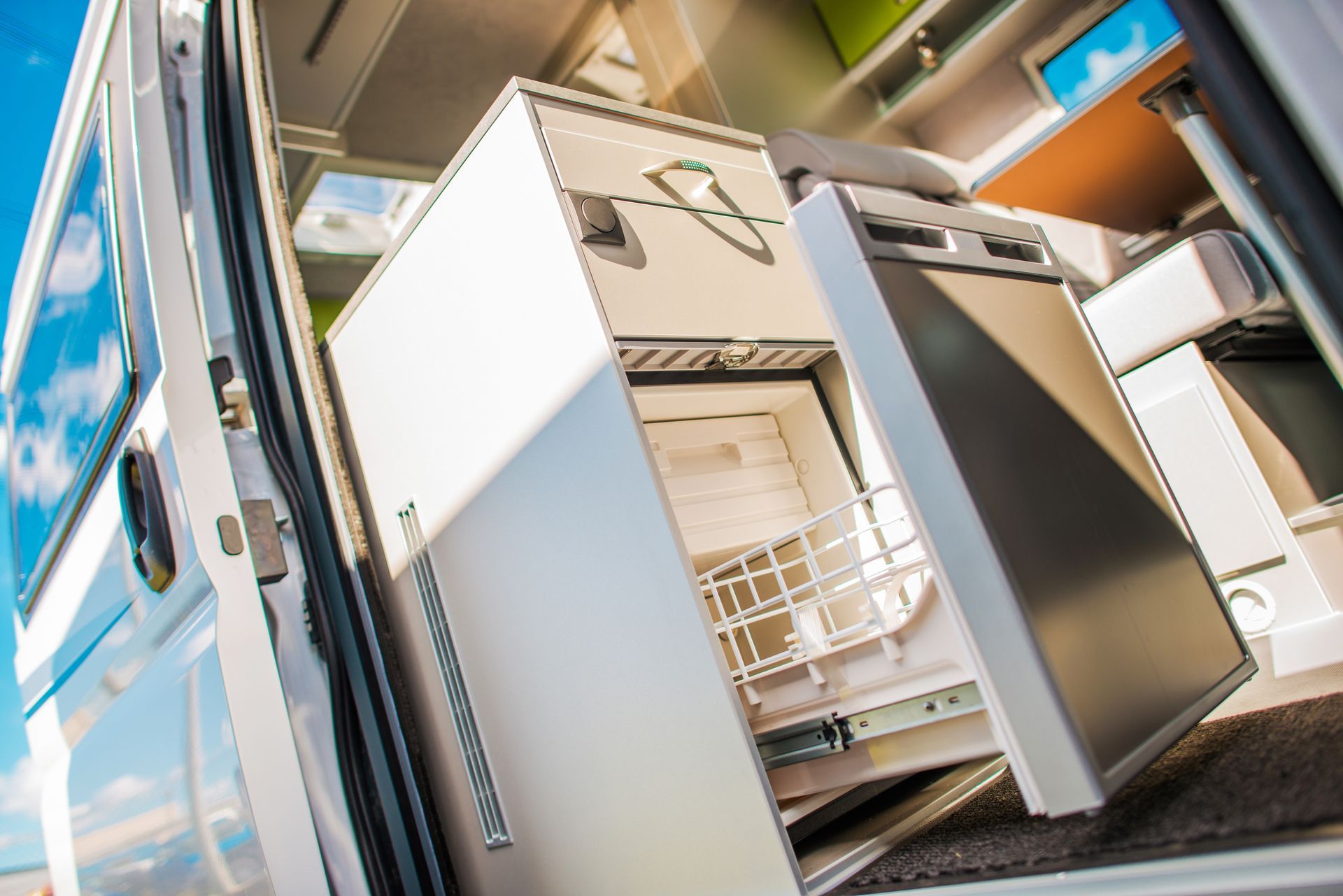
High Country RV provides RV refrigerator services focused on diagnosing, repairing, and maintaining cooling systems used in recreational vehicles. RV refrigerators are essential onboard appliances that preserve food and temperature-sensitive items during travel, storage, and extended stays. These systems operate under varying power sources and environmental conditions, making them sensitive to fuel delivery, electrical stability, and airflow efficiency.
RV refrigerator service includes inspection of both cooling mechanisms and supporting components such as thermostats, power sources, and ventilation systems. Because RV refrigerators are used in constantly shifting conditions, performance issues can develop from vibration, temperature extremes, or inconsistent power supply.
This service applies to RV units operating throughout Flagstaff and Mesa, Arizona, where elevation changes and high heat conditions can directly affect refrigeration efficiency and system stability.
Absorption RV Refrigerator Systems
Absorption refrigerators are commonly used in RVs due to their ability to operate on propane, electricity, or dual-power configurations. These systems rely on heat-driven chemical processes rather than traditional compressors.
Cooling Unit Operation
Absorption cooling units operate through a heat exchange cycle that uses ammonia, hydrogen gas, and water to produce cooling effects. Proper leveling of the RV is essential for maintaining circulation within the system, as imbalance can disrupt internal flow.
Propane Heating Element Function
The propane burner heats the solution within the cooling unit, initiating the refrigeration cycle. Any inconsistency in flame stability or fuel delivery can reduce cooling efficiency or cause system shutdown.
Leveling and Position Sensitivity
Absorption systems are highly sensitive to vehicle positioning. When an RV is parked on uneven ground, internal fluid flow may become restricted, leading to reduced cooling performance or intermittent operation.
Ventilation and Heat Dissipation
Rear ventilation systems allow heat to escape from the cooling unit. Blocked or restricted airflow can cause overheating and reduce overall refrigeration performance.
Compressor-Based RV Refrigerators
Compressor refrigerators function similarly to residential cooling units and are powered primarily through electrical systems. These units are more dependent on stable power delivery and less sensitive to leveling conditions.
Compressor Motor Operation
The compressor motor circulates refrigerant through a sealed system to produce cooling. Motor wear, overheating, or electrical instability can result in reduced cooling capacity or complete system failure.
Refrigerant Circuit Performance
The refrigerant system is inspected for pressure consistency, leaks, and flow efficiency. Even minor leaks can significantly impact cooling performance over time.
Thermostat and Control Function
Temperature regulation is managed through electronic thermostats and control boards. Faulty sensors or calibration issues may cause inconsistent cooling cycles or improper temperature maintenance.
Electrical Power Stability
Compressor refrigerators rely heavily on consistent electrical input. Voltage fluctuations, wiring issues, or battery instability can interrupt normal operation.
RV Refrigerator Diagnostics and Repair
Refrigerator diagnostics involve identifying the root cause of cooling inefficiencies or system failures across both absorption and compressor-based units. This process requires systematic evaluation of mechanical, electrical, and fuel-related components.
Cooling Performance Testing
Temperature levels are measured across refrigerator compartments to determine cooling consistency. Irregular temperature zones may indicate airflow restrictions or internal system imbalance.
Ignition and Fuel System Evaluation
For propane-powered units, ignition systems and burners are tested for proper flame generation and fuel delivery stability. Delayed ignition or weak flame output is diagnosed for underlying system faults.
Electrical Circuit Inspection
Electrical pathways, fuses, and control boards are evaluated for continuity and operational reliability. Faulty circuits can interrupt cooling cycles or prevent system startup.
Sensor and Control Module Analysis
Temperature sensors and control modules are tested for accurate readings and proper system communication. Malfunctioning sensors can lead to incorrect cooling responses or system shutdown.

Installation and Replacement of RV Refrigerators
RV refrigerator installation and replacement services involve removing malfunctioning units and integrating new or refurbished systems into existing RV configurations.
System Removal and Preparation
Existing refrigerator units are safely disconnected from electrical, propane, or mounting systems. Surrounding cabinetry and ventilation areas are inspected for compatibility with replacement units.
Fitment and Installation Alignment
New refrigerators are installed with careful attention to leveling, spacing, and ventilation clearance. Proper alignment ensures stable operation and prevents strain on cooling components.
Power and Fuel Connection Setup
Electrical connections and propane lines are securely integrated into the new unit. All connections are tested to confirm safe and stable energy delivery.
Operational Testing and Calibration
After installation, the system is tested for cooling performance, temperature accuracy, and power stability. Calibration ensures that the refrigerator operates within manufacturer specifications.
Electrical, Propane, and Ventilation Systems
RV refrigerators depend on multiple supporting systems to function correctly, including electrical supply, propane delivery, and ventilation pathways.
Electrical Supply Integrity
Electrical systems powering refrigerators are inspected for voltage stability, wiring condition, and circuit reliability. Inconsistent power delivery can disrupt cooling cycles.
Propane Delivery Systems
Propane lines, regulators, and valves are evaluated for safe fuel delivery to absorption refrigerators. Any irregularity in pressure or flow can affect cooling efficiency.
Ventilation Pathways
Proper airflow is essential for heat dissipation in both compressor and absorption systems. Blocked vents or restricted airflow can lead to overheating and reduced performance.
Control Interface Functionality
User interfaces, switches, and control panels are tested for responsiveness and accuracy. Faulty controls may prevent proper operation or adjustment of cooling settings.
RV Refrigerator Service in Flagstaff and Mesa, AZ
RV refrigerator service provided by High Country RV is designed to support the environmental conditions found across Arizona. In Flagstaff, cooler temperatures and elevation changes can affect absorption refrigerator efficiency and propane-based operation. In Mesa, high ambient temperatures place increased demand on cooling capacity and compressor performance.
Regular service and repair of RV refrigerators ensure consistent food storage conditions and stable operation during both travel and stationary use across Arizona’s varied climate conditions.